

What Factors Should You Consider When Choosing a Metal Enclosure?
Sep 12, 2026
Leave a message
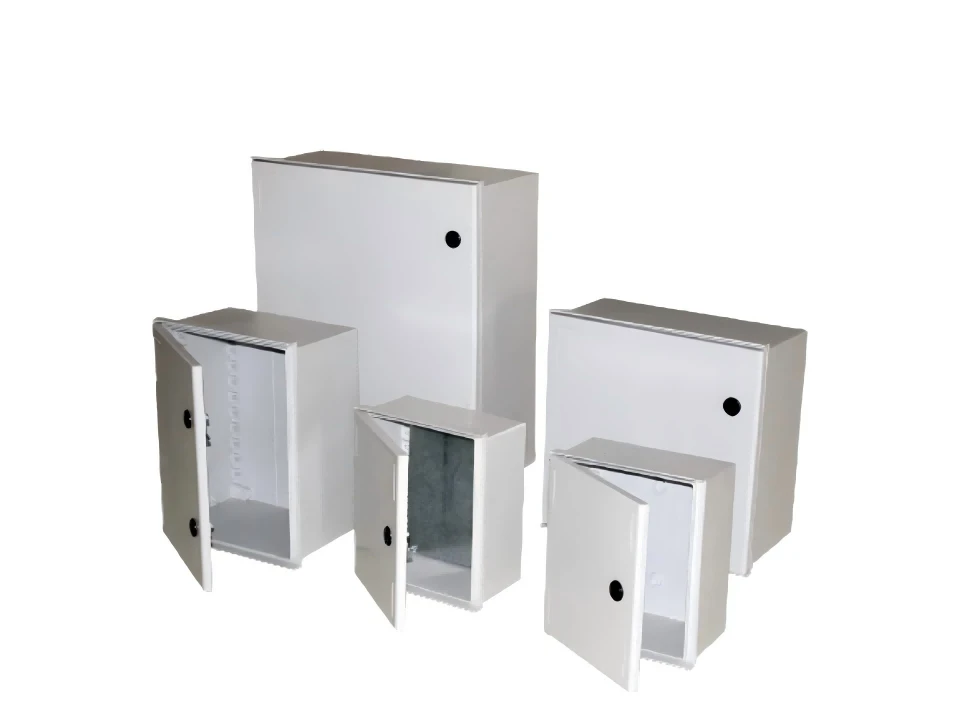
Selecting a metal enclosure for electrical equipment involves more than choosing a suitable size and material. The enclosure must work with the equipment installed inside, fit the available installation space, provide the required level of protection, and remain practical for wiring and maintenance.
For industrial equipment manufacturers, panel builders, system integrators, and electrical contractors, enclosure specifications can also affect assembly time and production cost. A cabinet that looks suitable on a drawing may create problems if the mounting space is insufficient, cable entries are poorly positioned, or the door cannot open fully after installation.
For this reason, buyers should evaluate the enclosure from both the equipment side and the manufacturing side before placing an order.
Check the Internal Equipment Layout
The first step is to understand what will be installed inside the enclosure. Electrical cabinets may contain circuit breakers, contactors, relays, terminal blocks, PLCs, power supplies, transformers, communication equipment, or other components.
The external enclosure dimensions should not be determined only by the size of the largest component. Space is also needed for wiring, cable bending, component spacing, and future maintenance.
A practical internal layout should consider:
- Component dimensions and mounting positions
- Clearance between electrical components
- Wiring channels and cable routing
- DIN rails or mounting plates
- Terminal access
- Ventilation requirements
- Space for future modifications
For example, a cabinet may technically fit all components but still be unsuitable if cables cannot be routed without sharp bends or if technicians cannot reach the terminals.
Measure the Available Installation Space
The enclosure must fit the location where it will actually be installed. This sounds simple, but installation restrictions are often overlooked during the early design stage.
Wall-mounted cabinets need sufficient wall space and suitable mounting points. Floor-standing cabinets require adequate floor clearance and may need a base or plinth. Equipment-mounted enclosures must match the frame or machine structure.
Buyers should check not only height and width but also cabinet depth, door opening space, cable clearance, and access from the front or rear.
For projects with restricted installation areas, providing the manufacturer with the available space can help determine whether a standard enclosure or a customized structure is more appropriate.
Decide on the Enclosure Configuration
Metal enclosures are available in different structural configurations. The choice depends on how the equipment will be operated and maintained.
A single-door enclosure may be suitable for smaller control equipment, while wider cabinets may use double doors. Some applications require an inner door for controls, displays, or meters while keeping the main electrical components behind a separate panel.
Other projects may need removable gland plates, detachable mounting plates, adjustable mounting rails, or separate cable compartments.
The enclosure configuration should therefore be considered together with the equipment layout rather than selected independently.
Consider Door Design and Accessibility
Door construction has a direct effect on installation and maintenance.
Before choosing an enclosure, check the required door opening angle, hinge position, locking method, handle location, and available working space. If the cabinet is installed next to another machine or wall, a fully opened door may interfere with surrounding equipment.
For control cabinets, the door may also need cutouts for switches, meters, displays, emergency controls, or indicator lights. Their positions should be confirmed before fabrication.
For larger cabinets, door stiffness is also worth considering. A large metal door may require reinforcement to maintain alignment and proper operation over repeated opening and closing.
Match the Protection Requirement to the Application
The enclosure should provide a protection level suitable for its actual environment.
Indoor control panels may mainly require protection against dust and accidental contact. Outdoor installations can face rain, humidity, temperature changes, and water spray. Industrial locations may also expose the enclosure to oil mist, metal particles, cleaning processes, or other contaminants.
IP ratings are commonly used to describe protection against solid particles and water. NEMA classifications may also be specified for certain North American applications.
However, the rating should not be considered separately from the enclosure design. Doors, gaskets, cable entries, ventilation openings, locks, and mounting interfaces can all affect the final protection performance.
Evaluate Mechanical Strength
Electrical enclosures often support considerable internal weight. A cabinet may contain mounting plates, breakers, transformers, power supplies, batteries, terminal assemblies, or other equipment.
The sheet thickness is therefore only one part of structural design. Bends, reinforcing ribs, mounting rails, welded sections, door construction, and the base structure can all influence stiffness.
For larger floor-standing cabinets, the supporting structure is particularly important. If heavy equipment is concentrated in one area, the mounting plate and cabinet frame should be designed accordingly.
Applications exposed to vibration or repeated transportation may require additional structural considerations.
Consider Cable Entry and Routing
Cable entry is frequently overlooked until the cabinet is already in production.
The location and number of incoming and outgoing cables should be considered when determining the enclosure structure. Cable glands, gland plates, conduit openings, and other entry points may need to be positioned on the bottom, top, side, or rear panel.
The available space around cable entries also matters. If several large cables enter the cabinet close together, there must be enough room for installation and bending.
For OEM projects, it is useful to provide the manufacturer with cable sizes and entry positions during the enclosure design stage rather than adding them later.
hink About Heat Management
Electrical equipment generates heat, and the enclosure can influence how that heat accumulates.
A small cabinet containing several heat-producing components may require ventilation or forced cooling. A larger enclosure may have enough surface area for natural heat transfer, depending on the internal heat load and installation conditions.
The cooling method can affect other enclosure requirements. For example, ventilation openings may influence dust protection, while fans and filters require additional mounting space and maintenance access.
Heat management should therefore be considered during enclosure design rather than treated as a separate issue after the cabinet is completed.
Check Surface Treatment Requirements
The surface treatment should correspond to the installation environment and appearance requirements.
For painted steel enclosures, powder coating is commonly used. Stainless steel may be supplied with different surface finishes depending on the application. Aluminum can also receive specific treatments for appearance and environmental resistance.
The buyer should confirm the required color, finish, coating type, and exposed surfaces before production.
For projects involving large quantities, consistent surface treatment is also important because differences in color or texture between production batches may affect the final equipment appearance.
Pay Attention to Manufacturing Tolerances
Custom metal enclosures contain multiple dimensions that must work together. Door openings, mounting holes, cutouts, hinges, locks, mounting plates, and cable entry positions cannot be treated as isolated measurements.
For example, a mounting hole that is only slightly misplaced may make a component difficult to install. A door cutout that is not aligned with the internal equipment can also create problems during final assembly.
For this reason, drawings should clearly identify important dimensions and mounting references. For more complicated projects, 3D design can also help check component clearance and potential interference before fabrication.
Prota's Approach to Custom Metal Enclosure Manufacturing
Prota, operated by Anji Huacheng Electrics Co., Ltd., focuses on metal enclosures, electrical cabinets, boxes, and related sheet metal products for industrial and OEM applications. Its product range covers wall-mounted enclosures, floor-standing cabinets, stainless steel enclosures, terminal boxes, junction boxes, network cabinets, and other electrical housing products.
The company has a production facility of approximately 14,000 m² and more than 15 years of experience in enclosure manufacturing. Its manufacturing process covers several stages, including design, laser cutting, bending, punching, welding, electrostatic spraying, inspection, polishing, and installation. This allows customized enclosure projects to move through multiple fabrication stages within the same manufacturing system.
Prota works with carbon steel, stainless steel, and aluminum alloy for different enclosure requirements. Custom dimensions, cutouts, mounting arrangements, colors, surface finishes, and other configuration details can be developed according to customer drawings or project specifications.
For OEM buyers, this manufacturing structure is useful when an enclosure requires more than a standard cabinet size. Projects involving specific component layouts, customized cable entries, special mounting structures, or repeat production can be evaluated from both the engineering and fabrication perspectives before production begins.
FAQ About Metal Enclosures
Start with the equipment layout and installation space. These two factors determine much of the enclosure's size, configuration, and mounting structure.
Not necessarily. Standard enclosures are practical for common applications. Custom enclosures are more suitable when equipment dimensions, cable entries, mounting positions, or installation space are unusual.
No. Sheet thickness should match the enclosure dimensions, structural load, mounting requirements, and application. Excessive thickness can increase weight and material cost without providing a useful benefit.
Very important. Incorrect cable entry locations can make wiring difficult and may require additional modifications. They should be confirmed before production.
Yes. Component dimensions, mounting points, wiring routes, heat generation, and maintenance access should all be considered when developing the enclosure structure.
Dimensioned enclosure drawings, component layouts, cutout drawings, cable entry positions, mounting requirements, and surface treatment specifications are useful for customized projects.
Send Inquiry