

How to Choose an Electrical Enclosure for Outdoor Applications?
Sep 15, 2026
Leave a message
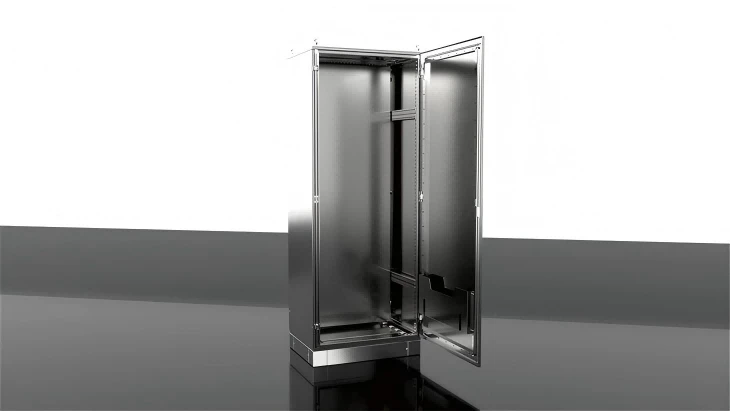
Electrical enclosures are commonly purchased in bulk by OEM manufacturers, system integrators, electrical contractors, distributors, and industrial equipment companies. In these projects, the enclosure needs to match the internal electrical components, installation space, cable routing, protection requirements, and assembly method of the finished equipment. A specification that looks acceptable on paper may still cause problems if the mounting layout, door clearance, cutouts, sealing structure, or sheet thickness does not match the actual application.
For bulk orders, these problems can be repeated across an entire production batch, increasing rework, installation time, replacement costs, and delivery delays. Buyers therefore need to evaluate more than the unit price when selecting an electrical enclosure manufacturer. Material selection, fabrication accuracy, IP protection, customization capability, batch consistency, certification, production capacity, packaging, and after-sales handling all need to be considered before placing an order. The following questions provide a practical checklist for evaluating a supplier and reducing procurement risks.
What Equipment Will Be Installed Inside the Enclosure?
The internal equipment should be confirmed before the enclosure specification is finalized. PLCs, circuit breakers, contactors, terminal blocks, power supplies, transformers, relays, communication modules, and other components require different amounts of mounting and wiring space.
For example, a control enclosure containing a PLC and terminal blocks needs enough clearance for cable bending and terminal access. A cabinet containing power components may require additional space around heat-generating equipment. Simply selecting an enclosure according to external dimensions can result in insufficient internal working space.
Before requesting a quotation, buyers should provide the component list, mounting arrangement, equipment dimensions, cable routing direction, and any door-mounted devices. A 2D drawing, 3D model, or internal layout drawing is particularly useful for customized projects.
Enclosure Dimensions and Installation Space
External dimensions need to match both the installation area and the internal equipment layout. For wall-mounted enclosures, buyers should confirm width, height, depth, mounting-hole positions, door-opening clearance, and cable-entry space.
For floor-standing cabinets, the footprint and overall height also affect transportation and installation. The internal mounting plate must leave sufficient room for components, wiring, terminal access, and future maintenance.
| Specification | What Buyers Should Confirm |
|---|---|
| External dimensions | Width, height, and depth |
| Internal clearance | Component and wiring space |
| Mounting plate | Size, thickness, and position |
| Door clearance | Opening direction and working space |
| Cable entry | Location and opening dimensions |
| Mounting holes | Diameter and hole spacing |
| Order quantity | Sample, trial, and bulk quantities |
For repeat orders, keeping the approved drawing as the production reference also helps maintain consistency between batches.
Material and Sheet Thickness Selection
Material selection depends on mechanical requirements, corrosion exposure, enclosure size, installation environment, and cost considerations.
Steel is commonly selected for industrial electrical enclosures where structural strength and cost control are important. Stainless steel is more appropriate for applications exposed to moisture or corrosive conditions. Aluminum can be considered when lower weight or specific corrosion characteristics are required.
Sheet thickness should also be matched to the enclosure structure. Larger doors and cabinet bodies may require thicker sheet or additional reinforcement to reduce deformation around hinges, locks, mounting points, and lifting areas.
Before ordering, buyers should specify:
- Material type and grade
- Body and door thickness
- Mounting plate thickness
- Reinforcement requirements
- Welding structure
- Surface treatment
- Expected environmental exposure
A manufacturer should review these requirements against the actual enclosure dimensions instead of applying one material specification to every application.
Door Structure and Sealing Requirements
The door is one of the most frequently used parts of an electrical enclosure. Its structure affects accessibility, sealing, maintenance, and the installation of door-mounted components.
For enclosures with frequent maintenance access, the door should provide enough opening space to reach internal components without interfering with adjacent equipment. For higher protection requirements, the gasket needs to form a continuous sealing path around the door.Buyers should confirm:
- Door opening direction
- Hinge type and position
- Lock configuration
- Gasket material
- Gasket placement
- Door reinforcement
- Opening angle
- Clearance for door-mounted components
These details may appear minor during quotation, but they can directly affect installation and maintenance after delivery.
Custom Cutouts and Internal Mounting Layouts
Industrial electrical enclosures often require openings for HMIs, switches, meters, connectors, cable glands, fans, ventilation components, and other equipment.
If these modifications are performed after the enclosures arrive, the buyer may need additional cutting, drilling, deburring, repainting, and inspection. This adds labor and can affect the original surface treatment.
A manufacturer supporting customized electrical enclosures should be able to work from customer drawings or specifications and produce:
- Custom dimensions
- Cutouts and openings
- Mounting holes
- Mounting plates
- Cable-entry structures
- Door-mounted equipment openings
- Internal component layouts
- Customized hinges and locks
For bulk purchasing, completing these operations at the factory helps reduce site modification work and keeps the delivered enclosures consistent with the approved drawing.
Batch Production and Dimensional Consistency
Bulk procurement creates a different quality requirement from prototype purchasing. A sample may meet the drawing, but the buyer also needs the 100th, 500th, or 1,000th enclosure to maintain the same hole positions, bending dimensions, door alignment, welding condition, and coating appearance.
Batch consistency depends on process control rather than final inspection alone. The manufacturer should maintain approved production drawings, material specifications, processing parameters, and inspection criteria throughout the order.
A typical quality-control sequence can include:
- Incoming material inspection
- Laser cutting dimension inspection
- CNC bending verification
- Welding inspection
- Door and hinge alignment
- Mounting-hole position verification
- Surface treatment inspection
- Gasket and accessory installation
- Final dimensional inspection
- Packaging inspection
For OEM customers, this control is especially important because the same enclosure may be used across multiple equipment models or repeat orders.
Certification and Inspection Requirements
Certification requirements should be confirmed before production rather than after the products are completed. Depending on the destination market and application, buyers may need CE, RoHS, UL-related documentation, ISO 9001 information, or IP test records.
The buyer should confirm:
- Which product or model is covered
- Which standard applies
- Whether the documentation is current
- Whether customized configurations affect certification
- Whether inspection reports are available
- Whether material documentation is required
A certificate by itself does not necessarily mean that every customized enclosure configuration is covered. The applicable requirements should be reviewed against the actual product specification.
OEM/ODM Development and Engineering Support
The supplier therefore needs to handle different levels of design input.
For drawing-based orders, the manufacturer should review dimensions, bend positions, welding structures, cutouts, mounting points, sealing areas, and assembly requirements before production. For ODM projects, the manufacturer may also need to help develop the enclosure structure based on the equipment layout.
A practical OEM/ODM workflow is:
Requirement review → drawing confirmation → prototype or sample → dimensional inspection → customer approval → mass production → final inspection.
This process gives the buyer an opportunity to identify manufacturability or installation problems before the entire order enters production.
How to Choose the Right Electrical Enclosure Manufacturer?
After evaluating the above factors, buyers can compare manufacturers based on the complete procurement process rather than the quotation for one enclosure.
| Evaluation Area | What to Check | Procurement Risk |
|---|---|---|
| Engineering | Drawing review and design support | Design problems |
| Materials | Grade and sheet thickness | Deformation or corrosion |
| Fabrication | Cutting, bending, and welding | Dimensional variation |
| Protection | IP structure and sealing | Dust or water ingress |
| Customization | Cutouts and mounting layouts | Site modification |
| QC | Process and final inspection | Batch inconsistency |
| Certification | Applicable documentation | Compliance issues |
| OEM/ODM | Prototype and drawing support | Development delays |
| Production | Factory capacity and scheduling | Delivery delays |
| Packaging | Protection and export packing | Transport damage |
| After-sales | Claim and replacement process | Extended downtime |
A supplier that can manage engineering review, fabrication, inspection, customization, packaging, and delivery within one manufacturing system is generally easier to manage for large-volume orders.
Why Choose Prota?
Prota is the manufacturing brand of Anji Huacheng Electrics Co., Ltd., specializing in metal electrical enclosures, electrical cabinets, boxes, and customized sheet metal products. The company has more than 15 years of manufacturing experience and operates a production facility of approximately 14,000 m². Its product range is organized into six main categories: Metal Enclosures, Floor Standing Electrical Cabinet, Electrical Plastic Box, IT Cabinets, Customized Metal Enclosures, and Enclosure Accessories.
The manufacturing process includes laser cutting, CNC bending, welding, and powder coating. Steel, stainless steel, and aluminum are available for different enclosure designs and operating environments. Production inspection includes material checking, dimensional verification, and surface inspection. For customized projects, Prota works with customer drawings and specifications covering enclosure dimensions, cutouts, mounting plates, cable entries, hinges, locks, sealing structures, and internal layouts.
For OEM and ODM orders, the production process can start from an existing customer drawing or from enclosure requirements that need further engineering development. Samples can be checked before mass production, while approved drawings and specifications can be used as references for subsequent batches. The company also lists CE, RoHS, UL, ISO 9001, IP55, IP66, and IP67 among its relevant product and certification requirements.
FAQ
Provide the enclosure dimensions, material, sheet thickness, IP requirement, quantity, application, cutout drawings, mounting requirements, and destination market whenever possible.
Yes. Customized dimensions, cutouts, mounting holes, mounting plates, cable-entry structures, and internal layouts can be produced according to customer requirements.
For complex OEM enclosures, a prototype or first-article sample is useful for checking dimensions, component fit, door operation, cable entry, and surface treatment before mass production.
Material specifications, dimensional consistency, IP protection, customization accuracy, production capacity, inspection procedures, delivery schedule, packaging, certification, and after-sales support can all affect the actual procurement cost.
Send Inquiry