

How Does Sheet Thickness Affect Electrical Enclosure Strength and Protection?
Sep 15, 2026
Leave a message
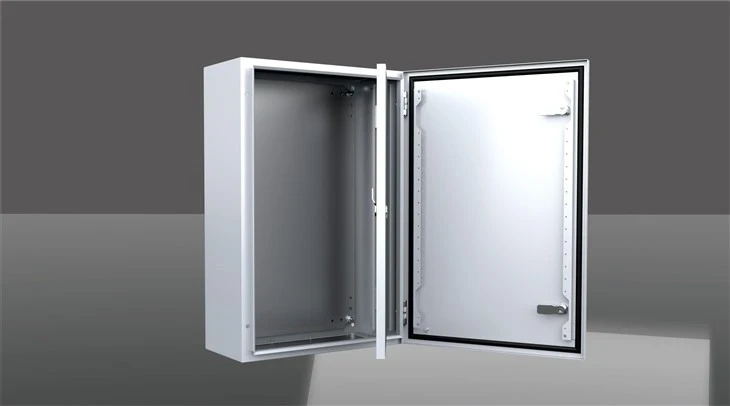
Sheet thickness is one of the first technical details buyers need to confirm when ordering an electrical enclosure. It affects more than the weight of the finished cabinet. The thickness of the body, door, mounting plate, and reinforcement parts influences panel stiffness, deformation during assembly, mounting stability, welding behavior, and the enclosure's ability to maintain its designed structure in service.
For OEMs, system integrators, electrical contractors, and distributors, the main question is not simply whether a 1.2 mm or 1.5 mm sheet is "better." The correct thickness depends on enclosure dimensions, material, internal equipment, door size, mounting method, cable openings, environmental conditions, and protection requirements. Using unnecessarily thick material increases material consumption, weight, and processing cost. Using insufficient thickness can create problems with large panels, heavy equipment, door alignment, or installation.
Why Does Sheet Thickness Matter in an Electrical Enclosure?
An electrical enclosure is normally assembled from several sheet-metal components rather than one solid structure. The body forms the main protective shell, while the door provides access, the mounting plate supports electrical components, and folded edges or reinforcement sections increase structural stiffness.
Sheet thickness directly affects how these components respond to mechanical loads. A larger panel made from thin sheet can be more susceptible to flexing when the door is opened, when cables are pulled through an entry point, or when equipment is mounted inside. A thicker sheet increases resistance to deformation, but the final structural performance still depends on the enclosure geometry.
This is why thickness should be considered together with panel size and construction rather than evaluated as an isolated specification.
Does a Thicker Sheet Always Mean a Stronger Enclosure?
Not necessarily.
A thicker sheet generally provides greater stiffness, but enclosure strength also comes from folded edges, frames, ribs, mounting structures, welding points, hinges, locks, and the way individual panels are connected. A well-designed enclosure can use structural features to control deformation without simply increasing the thickness of every component.
For example, a large door needs to maintain its position around the hinge and locking areas. If the door panel is large, the manufacturer may need to consider the door structure and reinforcement in addition to the sheet thickness. The same principle applies to a large enclosure body with a wide unsupported surface.
For buyers, this means a quotation should not be judged only by the thickness number. The enclosure's overall construction should also be checked.
How Should Thickness Be Selected for Different Enclosure Parts?
Different enclosure components carry different loads, so they may not require identical sheet thickness.
| Component | Main Function | Main Thickness Consideration |
|---|---|---|
| Enclosure body | Protects internal equipment and forms the main structure | Overall dimensions, mounting method and panel span |
| Door | Provides access while maintaining enclosure protection | Door size, hinges, lock and deformation |
| Mounting plate | Supports breakers, PLCs, terminals and other components | Equipment weight and mounting density |
| Reinforcement parts | Increase local stiffness | Large panels and concentrated loads |
| Cable-entry area | Allows cables and conduits to enter the enclosure | Size and number of openings |
| Internal brackets | Support specific components | Equipment weight and fixing method |
For example, a mounting plate carrying multiple circuit breakers, power supplies, terminal blocks, or control components may require different structural consideration from a side panel that mainly acts as a protective surface.
When Does Enclosure Size Affect the Required Thickness?
Enclosure dimensions are closely related to sheet thickness because larger panels usually have larger unsupported areas. As the panel size increases, the manufacturer needs to pay more attention to bending and deformation during handling, installation, and operation.
This is particularly important for floor-standing electrical cabinets and large customized metal enclosures. The cabinet may contain a considerable amount of electrical equipment, while the enclosure itself may also be moved, lifted, transported, and installed before commissioning.
In these applications, simply changing from a thinner sheet to a thicker sheet may not be the only option. Folded structures, internal frames, reinforcement sections, and mounting arrangements can also be used to improve rigidity.
During the quotation stage, buyers should therefore provide the actual enclosure dimensions and internal layout whenever possible. A manufacturer can then evaluate thickness as part of the complete structure.
How Does Sheet Thickness Affect the Door?
The door is one of the enclosure components most sensitive to structural design. It is opened and closed repeatedly, carries locks and handles, and may contain viewing windows, push buttons, displays, ventilation components, or other cutouts.
A large door made from insufficiently rigid sheet may experience deformation around the hinge or locking area. This can affect alignment between the door and enclosure body. If a gasket is used, excessive movement may also affect how consistently the gasket contacts the mating surface.
For customized electrical enclosures, door dimensions, hinge locations, locking points, cutouts, and reinforcement should therefore be considered together with the selected sheet thickness.
Can Sheet Thickness Affect IP Protection?
Sheet thickness does not directly determine an IP rating, but it can influence the enclosure structure that supports sealing performance.
IP protection depends on the complete enclosure design, including the door, gasket, seams, cable entries, covers, locks, and openings. If a panel or door is too flexible, movement or deformation can affect the relationship between these components.
Cable-entry openings are another important point. Large cutouts remove material from the panel and may reduce local stiffness. Multiple openings placed close together can create a different structural condition from a single small cable entry.
For this reason, buyers specifying IP55, IP65, IP66, or another protection requirement should confirm the enclosure construction rather than assuming that increasing sheet thickness alone will provide a higher IP rating.
Does Material Change the Thickness Decision?
Yes. Sheet thickness cannot be separated from material selection.
Prota works with steel, stainless steel, and aluminum for customized metal enclosure projects. These materials have different mechanical and fabrication characteristics, so the same nominal thickness should not automatically be treated as equivalent in every design.
Material selection also depends on the working environment. Stainless steel may be selected where corrosion resistance is a major concern, while aluminum can be considered when weight reduction is important. Steel remains a common choice for many electrical cabinets and enclosures where structural requirements and surface treatment need to be balanced.
The appropriate thickness should therefore be confirmed after the material, enclosure dimensions, and application conditions have been defined.
How Do Cutouts and Cable Entries Affect Structural Strength?
Modern electrical enclosures often require more than a simple rectangular box. Buyers may need openings for cable glands, push buttons, circuit breakers, displays, connectors, ventilation components, conduits, terminals, or cooling equipment.
Every cutout changes the original panel structure. A large opening can reduce the amount of continuous sheet around the area, while several openings positioned close together can create a weaker section. The effect becomes more important when the panel itself is large or when equipment is mounted close to the opening.
During custom enclosure production, cutout dimensions and locations should therefore be finalized together with the sheet thickness. This is especially important for OEM projects where the enclosure must match a specific electrical assembly.
How Does Sheet Thickness Affect Manufacturing Cost?
Material cost is the most obvious factor, but it is not the only one.
Thicker sheet increases the amount of raw material used for each enclosure and also increases the finished weight. For large-volume orders, even a small increase in material consumption per cabinet can affect the total procurement cost.
Thickness can also influence fabrication. Laser cutting, bending, punching, welding, handling, and transportation all need to be considered when the material specification changes.
On the other hand, reducing thickness only to lower the initial unit price can create additional costs if the enclosure requires reinforcement, modification, rework, or structural correction later.
For bulk purchasing, the better approach is to establish a thickness specification based on the actual enclosure design instead of selecting the lowest material weight or simply choosing the thickest available sheet.
How Does Prota Handle Custom Sheet Metal Enclosure Manufacturing?
Prota is the manufacturing brand of Anji Huacheng Electrics Co., Ltd., a China-based manufacturer specializing in electrical enclosures and customized sheet metal fabrication. The company has more than 15 years of manufacturing experience, approximately 14,000 m² of production space, more than 5,000 custom enclosure projects, and over 100 patents. These figures reflect an established manufacturing operation rather than a simple trading-based enclosure supply model.
Its product range covers six main categories: Metal Enclosures, Floor Standing Electrical Cabinet, Electrical Plastic Box, IT Cabinets, Customized Metal Enclosures, and Enclosure Accessories. For customized projects, buyers can specify dimensions, materials, door structures, mounting plates, cable entries, cutouts, locks, hinges, and other enclosure details according to the equipment being installed.
The manufacturing process covers laser cutting, bending, punching, welding, electrostatic spraying, inspection, polishing, and installation. Prota works with steel, stainless steel, and aluminum, allowing material and sheet thickness to be considered together with the required enclosure structure and application.
For OEM and bulk orders, this manufacturing setup is important because sheet thickness is rarely the only parameter that needs to be controlled. Body dimensions, door construction, mounting plates, cutouts, cable routing, surface treatment, and tolerances all need to remain consistent from the approved drawing through production.
FAQ
No. A thicker sheet can provide greater rigidity, but the required thickness depends on enclosure size, material, structural design, loading, and application.
Not necessarily. These components perform different functions and can be specified separately according to their structural requirements.
No. IP protection depends on the complete enclosure construction, including gaskets, doors, seams, cable entries, and other openings.
Yes. For customized electrical enclosures, thickness can be evaluated together with material, dimensions, internal equipment, cutouts, mounting arrangements, and production requirements.
Send Inquiry