

What Is the Difference Between a UL Listed Enclosure and a Standard Metal Enclosure?
Sep 15, 2026
Leave a message
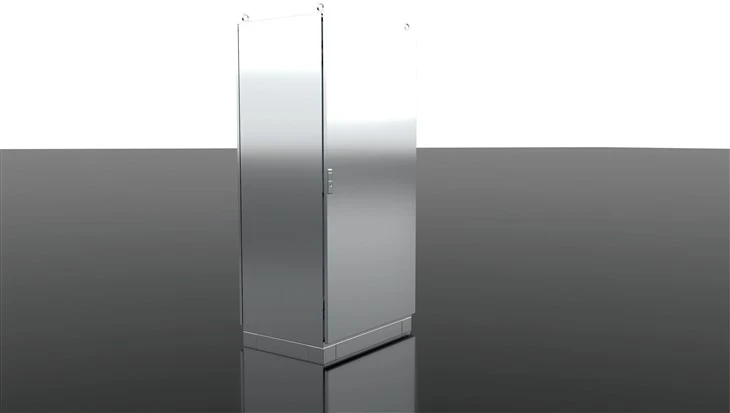
When an electrical enclosure is specified for an industrial control panel, power distribution system, automation machine, or OEM assembly, buyers may see "UL Listed," "IP66," "steel enclosure," and other terms listed together. These specifications describe different aspects of the product. A standard metal enclosure defines the physical housing and its construction, while a UL Listed enclosure indicates that the specified product configuration has been evaluated against applicable UL requirements.
The difference becomes more important when an enclosure is purchased in batches. A standard metal enclosure can generally be developed around the customer's drawings, including dimensions, mounting holes, cable entries, doors, locks, and mounting plates. A UL-related project requires more control over the materials, construction, components, markings, and possible modifications. The certification requirement should therefore be identified before the enclosure design is released for production.
What Is a Standard Metal Enclosure?
A standard metal enclosure is a fabricated housing designed to protect electrical components, wiring, terminals, controls, or other equipment from the surrounding environment. Its construction is normally determined by the equipment layout, installation position, required dimensions, material, sheet thickness, door structure, and protection requirements.
For example, a wall-mounted steel enclosure may contain a cabinet body, hinged door, mounting plate, gasket, lock, cable-entry plate, and mounting hardware. The manufacturer can then produce openings for push buttons, displays, connectors, cable glands, circuit breakers, or other components according to the approved drawing.
For purchasing, the important specifications usually include:
- External length, width, and depth
- Steel, stainless steel, or aluminum material
- Body, door, and mounting plate thickness
- Single-door or double-door configuration
- Mounting plate dimensions and position
- Cable-entry location and opening size
- Lock and hinge arrangement
- Surface treatment and color
- Required IP protection
- Production quantity and dimensional tolerance
A standard enclosure can therefore be highly customized without being UL Listed.
What Does a UL Listed Enclosure Add to the Specification?
A UL Listed enclosure is not simply a standard metal enclosure with a UL mark added to the finished product. The UL status is connected to a defined product construction and the requirements applicable to that certification.
Depending on the enclosure type and certification scope, factors such as construction, materials, grounding arrangements, mechanical features, markings, and other product details may be evaluated. This changes how design modifications are handled during manufacturing.
For a normal custom enclosure, a buyer may ask the manufacturer to change the door, move a cable entry, alter the mounting plate, or change the enclosure dimensions after reviewing the drawing.
For a UL-related project, those changes need to be checked against the applicable certification requirements.
Items that may require review include:
| Design Item | Why It Matters |
|---|---|
| Material | The selected material may form part of the certified construction |
| Sheet thickness | It can affect the defined enclosure construction |
| Door structure | Changes may affect mechanical and safety requirements |
| Cable openings | New openings can change the enclosure configuration |
| Grounding | Grounding provisions may be part of the safety evaluation |
| Locks and hinges | Their construction and installation can affect the enclosure |
| Internal components | Component selection and arrangement may be relevant |
| Sealing | Changes can affect both enclosure construction and protection |
| Product marking | Required identification may need to follow the certification |
The exact requirements depend on the applicable UL certification. Therefore, asking whether a factory "has UL" is not enough. The buyer needs to know whether the specific enclosure configuration is covered.
Does UL Listing Mean the Enclosure Is Mechanically Stronger?
Not necessarily.
UL Listing and mechanical strength are separate considerations. A conventional steel enclosure can use a relatively thick sheet, reinforced door, welded frame, and heavy-duty hinges without carrying a UL Listing. At the same time, a UL Listed enclosure may use a different construction that satisfies its applicable requirements.
The mechanical design should be selected according to the actual installation conditions.
For example, an enclosure may be:
- Wall mounted inside an electrical room
- Installed directly on industrial machinery
- Used as a floor-standing cabinet
- Installed outdoors
- Exposed to vibration
- Subjected to occasional impact
- Used to house heavy electrical components
- Designed around a large internal mounting plate
These conditions affect sheet thickness, reinforcement, mounting points, door structure, hinge selection, and cabinet dimensions.
UL compliance does not replace this mechanical assessment.
How Is UL Different From an IP Rating?
UL and IP ratings are frequently shown on the same enclosure specification, but they should not be treated as equivalent terms.
An IP rating describes the enclosure's resistance to the entry of solids and water. IP55, IP66, and IP67 represent different levels of ingress protection.
UL certification addresses compliance with applicable UL safety requirements. It is not another way of describing IP66 or IP67.
A project may therefore require both:
| Specification | What It Defines |
|---|---|
| Standard metal enclosure | Physical enclosure construction |
| IP55 enclosure | Specified protection against dust and water |
| IP66 enclosure | Higher level of dust and water protection |
| UL Listed enclosure | Compliance with applicable UL requirements |
| UL + IP66 enclosure | Both certification and ingress protection requirements |
For this reason, an RFQ stating only "UL enclosure" can be incomplete. If the equipment also needs IP66 protection, the IP requirement should be stated separately.
Does the Enclosure Material Affect UL Requirements?
Material selection should be discussed early in a UL-related project.
Steel, stainless steel, and aluminum can all be used for electrical enclosure construction, but they are not interchangeable simply because they perform the same basic housing function.
Steel is commonly selected for industrial cabinets where rigidity and sheet-metal strength are important. Stainless steel can be selected for environments where corrosion resistance is a major concern. Aluminum can be considered when reducing enclosure weight is part of the design requirement.
The sheet material also needs to be considered together with thickness, forming method, welding, surface treatment, grounding provisions, and the final enclosure structure.
For a standard custom enclosure, a material change may be handled as a normal engineering revision. For a UL-related enclosure, the buyer should confirm the effect of the change before production because the approved construction may depend on specific material specifications.
Can You Add Custom Cutouts to a UL Listed Enclosure?
Custom cutouts are routine in electrical enclosure manufacturing. Laser cutting and other sheet-metal processes can produce openings for:
- Cable glands
- Push buttons
- HMI displays
- Circuit breakers
- Connectors
- Terminal blocks
- Ventilation components
- Conduit entries
- Cooling equipment
For a standard enclosure, the manufacturer normally checks the cutout size, position, edge distance, tolerance, and installation requirements against the customer's drawing.
A UL-related enclosure requires another level of review. A new opening can change the physical construction, sealing arrangement, component mounting, grounding arrangement, or other features covered by the applicable certification.
For example, adding a large display opening to a door is not just a cutting operation. The manufacturer also needs to consider the remaining door structure, mounting method, sealing around the display, and the relationship between the new opening and existing components.
This is why complete cutout information should be included in the production drawing before mass manufacturing rather than added after the certified enclosure has already been produced.
What Should Be Checked Before Placing a Bulk Order?
For bulk purchasing, "UL Listed" should be only one item on the purchasing checklist. The production drawing should define the complete enclosure configuration before the order enters mass production.
| Item | Details to Confirm |
|---|---|
| Certification | Applicable UL requirement and certification scope |
| Material | Steel, stainless steel, aluminum, or specified material |
| Thickness | Body, door, mounting plate, and reinforcement |
| Dimensions | External size and usable internal space |
| Door | Door quantity, opening direction, hinges, and structure |
| IP Protection | Required IP rating |
| Cutouts | Size, location, quantity, and tolerance |
| Cable Entry | Bottom, side, gland plate, or other arrangement |
| Mounting | Wall, floor-standing, machine, or other installation |
| Surface | Powder coating, finish, color, and corrosion requirements |
| Accessories | Locks, hinges, mounting plates, brackets, glands |
| Inspection | Dimensional, material, surface, and certification-related checks |
| Documentation | Approved drawings and applicable certification documents |
This approach gives purchasing teams a better basis for comparing suppliers than using the phrase "UL certified" as the main selection criterion.
How Does Production Control Differ Between the Two?
The manufacturing processes for standard and UL-related metal enclosures can be similar. The main difference is the degree of control applied to the approved construction.
A typical production sequence includes material preparation, laser cutting, bending, punching where required, welding, surface treatment, assembly, and final inspection.
For a standard enclosure, production mainly follows the customer's approved drawing and agreed specifications.
For a UL-related enclosure, the certified configuration also needs to remain consistent throughout production. A workshop change such as using a different sheet thickness, relocating a hole, changing a grounding detail, or modifying a component arrangement should not be treated as an informal production adjustment.
This matters even more for repeat orders. If a customer purchases hundreds or thousands of enclosures across several batches, the approved drawing should remain the production reference. Otherwise, small changes between batches can create differences in fit, assembly, certification scope, or installation.
Why Choose Prota for Custom Electrical Enclosures?
Prota is the manufacturing brand of Anji Huacheng Electrics Co., Ltd., a China-based manufacturer specializing in electrical enclosures and customized sheet metal fabrication. With more than 15 years of manufacturing experience and approximately 14,000 m² of production space, the company has handled more than 5,000 custom enclosure projects and lists over 100 patents. This experience supports both standard enclosure production and enclosure designs developed around specific equipment and installation requirements.
Prota's product range covers six main categories: Metal Enclosures, Floor Standing Electrical Cabinet, Electrical Plastic Box, IT Cabinets, Customized Metal Enclosures, and Enclosure Accessories. For custom metal enclosure projects, buyers can specify dimensions, material, door configuration, mounting plates, cable entries, cutouts, locks, hinges, and internal arrangements according to the equipment being installed.
The manufacturing process covers laser cutting, CNC bending, punching, welding, electrostatic spraying, inspection, polishing, and installation. Steel, stainless steel, and aluminum are available for different enclosure structures and environmental requirements. This allows the enclosure design to be considered together with material thickness, mechanical structure, surface treatment, mounting method, and cable routing rather than treating the enclosure as a simple sheet metal box.
For projects with UL requirements, Prota's product information includes UL among the certification requirements applicable to relevant products. The important point for bulk buyers is to confirm the required enclosure construction, materials, openings, mounting arrangements, and documentation before production. Changes made after approval may affect the configuration that was originally reviewed, so these details should be settled during the engineering stage.
FAQ
Not automatically. If the project specifically requires a UL Listed enclosure, the applicable requirement and the certification scope of the actual enclosure configuration should be confirmed before production.
Customization may be possible, but dimensions, cutouts, materials, mounting arrangements, and other changes should be reviewed against the applicable certification requirements before production.
It can. Sheet thickness may form part of the defined enclosure construction. Any change should therefore be reviewed rather than treated as a routine workshop adjustment.
The RFQ should specify the enclosure dimensions, material, sheet thickness, IP requirement, UL requirement, door configuration, mounting plate, cable entries, cutouts, quantity, surface treatment, and required certification documentation.
Send Inquiry