

How to Select the Right Material for an Electrical Enclosure?
Sep 12, 2026
Leave a message
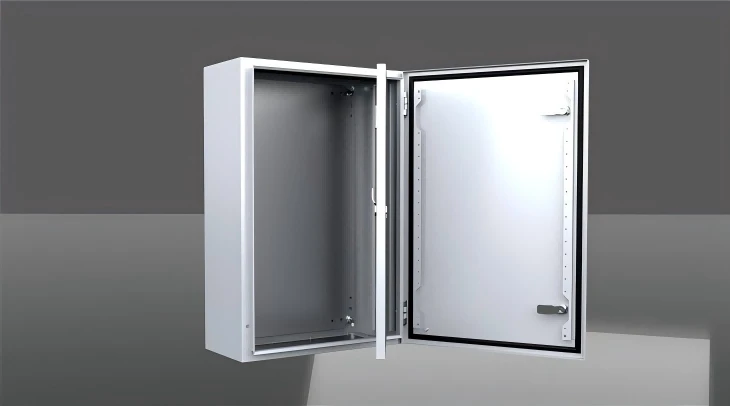
Selecting the right material is one of the first technical decisions when designing or purchasing an electrical enclosure. The enclosure must protect electrical components from moisture, dust, chemicals, impact, temperature changes, and other external conditions, while also meeting requirements for weight, thermal management, fabrication, and installation.
Common choices include carbon steel, stainless steel, aluminum, and non-metallic materials. Each has different mechanical and environmental characteristics. The correct choice depends less on the material itself and more on where the enclosure will be installed, what it needs to protect, and how it will be maintained throughout its service life.
Start With the Operating Environment
The installation environment should be evaluated before selecting the enclosure material.
An electrical cabinet installed inside a clean factory may face little corrosion risk, while an outdoor cabinet can be exposed to rain, condensation, UV radiation, temperature fluctuations, and airborne contaminants. Chemical processing areas introduce another set of requirements, while coastal locations may have significant chloride exposure.
Key environmental factors include:
- Moisture and condensation
- Salt spray and coastal exposure
- Chemical vapors
- Dust and dirt
- Ambient temperature
- Direct sunlight
- Mechanical impact
- Vibration
- Cleaning procedures
For example, carbon steel with an appropriate surface treatment can be suitable for many indoor industrial installations. In contrast, stainless steel or aluminum may be more appropriate where moisture or corrosion is a major concern.
Carbon Steel: A Practical Choice for General Industrial Use
Carbon steel is widely used for electrical cabinets because it combines structural strength with relatively straightforward fabrication.
It is suitable for applications such as control cabinets, distribution cabinets, automation equipment, and indoor electrical panels. Its mechanical strength allows manufacturers to produce rigid doors, mounting plates, and cabinet structures without excessive material thickness.
The main concern is corrosion. Bare carbon steel is susceptible to oxidation when exposed to moisture. Therefore, surface preparation and coating become important parts of the enclosure design.
Powder coating, for example, can provide an additional protective layer. However, buyers should consider more than the coating color. Pretreatment, coating thickness, edge coverage, welded areas, and damaged surfaces can all affect long-term corrosion behavior.
Stainless Steel for More Demanding Environments
Stainless steel becomes more attractive when corrosion resistance is a major purchasing requirement.
304 Stainless Steel
304 stainless steel is commonly considered for industrial environments where the enclosure may encounter moisture, cleaning processes, or moderate corrosive exposure.
It is often used in food-processing facilities, industrial production areas, outdoor equipment, and other locations where maintaining the enclosure surface is important.
However, 304 should not automatically be considered suitable for highly corrosive conditions. Chloride exposure, particularly in coastal or marine environments, can create more demanding corrosion conditions.
316 Stainless Steel
316 stainless steel is generally considered when chloride exposure or stronger chemical resistance is required.
It can be appropriate for coastal installations, marine-related equipment, and certain chemical-processing applications. The higher material cost needs to be evaluated against the expected service environment and maintenance requirements.
The important point is that choosing stainless steel is not simply a matter of selecting a more expensive grade. The specific environmental exposure should determine whether the additional material cost provides a meaningful engineering benefit.
Aluminum When Weight and Heat Matter
Aluminum offers a different combination of properties.
Its relatively low density can reduce enclosure weight, which is useful for wall-mounted equipment, transportation-sensitive installations, and applications where technicians frequently need to handle or reposition the enclosure.
Aluminum also has good thermal conductivity. When electrical components generate significant heat, this characteristic can contribute to heat transfer through the enclosure walls.
However, aluminum does not automatically eliminate the need for thermal design. Internal component density, enclosure dimensions, ambient temperature, ventilation, and cooling equipment remain important.
The material should therefore be selected together with the expected thermal load rather than considered separately.
When Non-Metallic Materials Make Sense
Plastic and fiberglass-reinforced materials can be useful alternatives to metal in specific applications.
Polycarbonate enclosures, for example, can provide electrical insulation and low weight. Fiberglass-reinforced polyester can be considered where corrosion from moisture or certain chemicals is a concern.
The main limitation is that non-metallic enclosures do not naturally provide the same electromagnetic shielding characteristics as metal enclosures.
If the equipment contains sensitive electronics or generates significant electromagnetic interference, engineers may need to evaluate shielding requirements before choosing a non-metallic enclosure.
Mechanical Strength Should Not Be Overlooked
Material selection also determines how the enclosure behaves mechanically.
Large floor-standing cabinets may require greater structural rigidity than small junction boxes. Doors containing meters, switches, displays, or cooling equipment may also require additional reinforcement.
The following factors should be considered:
- Enclosure dimensions
- Sheet thickness
- Door size
- Mounting plate load
- Hinge configuration
- Locking mechanism
- Cable-entry openings
- Transportation and installation conditions
- Expected vibration or impact
Using a stronger material does not necessarily mean that the enclosure is better designed. Structural performance depends on material grade, thickness, geometry, reinforcement, joints, and manufacturing method.
Consider Heat Generated Inside the Enclosure
Electrical components generate heat during operation, and enclosure material is one factor influencing how that heat is managed.
Power supplies, variable-frequency drives, transformers, relays, circuit breakers, and other components can increase internal temperature. If heat cannot escape effectively, component operating temperatures may rise.
Metal enclosures generally provide better thermal conduction than many polymeric materials. Aluminum can be particularly useful when both low weight and thermal conductivity are desired.
However, material selection should be combined with an assessment of:
- Total internal heat generation
- Ambient temperature
- Enclosure surface area
- Internal component spacing
- Ventilation
- Fans or heat exchangers
- Solar radiation for outdoor installations
This prevents the common mistake of expecting the enclosure material alone to solve a thermal problem.
Material Selection and Enclosure Protection
The material should also be evaluated together with the enclosure's protection requirements.
An enclosure's resistance to water and dust does not depend solely on whether it is made from steel, stainless steel, or aluminum. The complete construction is important, including:
Door seams
Gaskets
Cable glands
Mounting interfaces
Welded joints
Access panels
Ventilation openings
For applications requiring higher IP protection, these details can be just as important as the material itself.
A stainless steel enclosure with poorly designed cable entries may provide less practical protection than a properly constructed coated-steel enclosure designed for the same environmental conditions.
Material Selection Guide
| Application | Material to Consider | Main Selection Factor |
|---|---|---|
| Indoor control cabinet | Carbon steel | Strength and fabrication cost |
| General industrial use | Coated carbon steel | Mechanical protection and corrosion control |
| Moist industrial environment | 304 stainless steel | Corrosion resistance |
| Outdoor equipment | Aluminum or stainless steel | Weather and corrosion exposure |
| Coastal environment | 316 stainless steel | Chloride resistance |
| Weight-sensitive installation | Aluminum or non-metallic | Reduced weight |
| Chemical exposure | 316 stainless steel or fiberglass | Resistance to corrosive conditions |
| EMI-sensitive equipment | Steel or aluminum | Electromagnetic shielding |
| Heat-generating equipment | Aluminum or metal | Thermal conduction |
This table should be used as a starting point rather than a fixed specification. Actual material selection should be based on the complete operating environment.
What Should Buyers Confirm Before Ordering?
For B2B electrical enclosure procurement, simply specifying "stainless steel enclosure" or "metal cabinet" is usually insufficient.
The purchasing specification should clearly define the material grade, thickness, surface treatment, dimensions, protection requirements, and installation environment.
Buyers should also confirm whether the enclosure requires:
- Specific stainless steel grades such as 304 or 316
- A defined surface treatment for carbon steel
- A particular wall or mounting plate thickness
- Outdoor corrosion protection
- Electromagnetic shielding
- Thermal management provisions
- Specific cable-entry arrangements
- Required IP or NEMA protection
- Particular testing or certification requirements
Clear specifications make it easier for the manufacturer to select suitable materials and maintain consistency between samples and mass production.
Custom Electrical Enclosure Manufacturing by Prota
Material selection is only one part of enclosure manufacturing. The enclosure also needs to match the required dimensions, component layout, mounting method, surface treatment, and protection level. Prota supports customized electrical enclosure projects from engineering design through sheet metal fabrication and final assembly.
The company works with carbon steel, stainless steel, and aluminum for different enclosure requirements. Custom services can include:
- Custom enclosure dimensions and structures
- Material and thickness selection
- Precision laser cutting and CNC bending
- Welding and sheet metal forming
- Custom cutouts and mounting arrangements
- Powder coating and other surface treatments
- Internal mounting and assembly
- OEM production based on customer drawings
Prota has more than 15 years of engineering experience and operates a production facility covering around 14,000 m². Its manufacturing process includes design, laser cutting, bending, punching, welding, surface treatment, inspection, and assembly, allowing different production stages to be coordinated within one manufacturing system.
The company supports enclosure projects for industrial automation, power distribution, telecommunications, renewable energy, and other electrical equipment applications. For buyers who already have drawings or defined technical specifications, Prota can also support customized enclosure development and production based on project requirements.
FAQ About Electrical Enclosure Materials
What material is commonly used for electrical enclosures?
Carbon steel is commonly used for indoor electrical cabinets because it offers good mechanical strength and is easy to cut, bend, weld, and finish. Stainless steel and aluminum are selected when the environment or weight requirements call for them.
Is stainless steel better than carbon steel?
Not always. Stainless steel is a better fit for humid, corrosive, or frequently cleaned environments. For standard indoor applications, coated carbon steel can provide the required protection at a lower material cost.
What is the difference between 304 and 316 stainless steel?
304 stainless steel is suitable for general corrosion-resistant applications. 316 contains molybdenum and provides better resistance to chloride exposure, making it more suitable for coastal, marine, and chemical environments.
Is aluminum suitable for outdoor enclosures?
Yes. Aluminum is lightweight and naturally resistant to corrosion. It can be considered for outdoor equipment where reducing enclosure weight is important, although the alloy, coating, wall thickness, and sealing design should still be specified.
Does the material affect enclosure heat dissipation?
Yes. Different materials have different thermal conductivity. Aluminum transfers heat more readily than many steel grades, but material selection alone does not determine enclosure temperature. Internal heat load, ventilation, enclosure size, and cooling components also need to be considered.
Should material selection come before the IP rating?
They should be considered together. The material affects corrosion resistance and mechanical performance, while the enclosure structure, door design, gasket, cable entries, and assembly determine much of the final ingress protection.
Send Inquiry