

ABS Vs. PC Vs. ABS/PC Electrical Enclosures: Material Selection And Glow Wire Testing
Nov 16, 2026
Leave a message
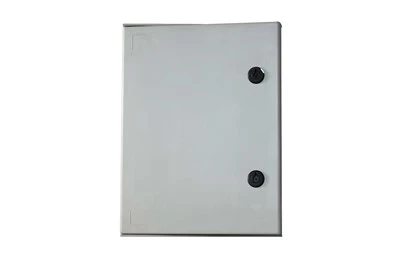
Plastic electrical enclosures are widely used in power distribution, industrial control systems, terminal connections, and electrical equipment installations. Compared with metal housings, plastic enclosures offer electrical insulation, corrosion resistance, lightweight construction, and flexible molding options.
However, not all engineering plastics provide the same performance. ABS, polycarbonate (PC), and ABS/PC blends have different mechanical, thermal, and processing characteristics. Selecting the appropriate material requires an understanding of the enclosure's operating environment, electrical safety requirements, structural design, and applicable fire-resistance testing.
For electrical equipment manufacturers and industrial buyers, material selection becomes particularly important when a project specifies a 960°C glow wire test requirement. The body and cover may need to use different materials, and their performance must be evaluated according to the relevant testing criteria.
This guide explains the differences between ABS, PC, and ABS/PC electrical enclosures, with a focus on glow wire requirements, enclosure construction, and manufacturing considerations.
Understanding ABS, PC, and ABS/PC Electrical Enclosure Materials
The material used for an electrical enclosure affects its insulation properties, impact resistance, heat resistance, surface finish, and manufacturing cost.
Three common material configurations are ABS body with ABS lid, ABS body with PC lid, and ABS/PC blended material. Each configuration has different characteristics and should be evaluated against the actual application requirements.
ABS Electrical Enclosures
ABS (Acrylonitrile Butadiene Styrene) is a thermoplastic commonly used in electrical housings and industrial plastic boxes.
Its main characteristics include:
- Good electrical insulation properties.
- Good impact resistance for general applications.
- Relatively easy injection molding and processing.
- Good surface finish and dimensional consistency.
- Flexible options for colors and enclosure designs.
ABS is commonly selected for indoor electrical boxes, terminal housings, distribution components, and equipment covers.
However, standard ABS grades should not automatically be considered suitable for applications requiring high-temperature resistance or specific glow wire performance. The actual properties depend on the resin formulation, flame-retardant additives, and material grade.
Polycarbonate (PC) Electrical Enclosures
Polycarbonate is an engineering thermoplastic known for its impact resistance, toughness, and thermal performance.
Compared with standard ABS, PC generally offers better heat resistance and impact performance, although the exact results depend on the selected grade and test conditions.
Its characteristics include:
- High impact resistance.
- Good dimensional stability.
- Better thermal performance than many standard ABS grades.
- Availability of transparent and opaque grades.
- Electrical insulation properties.
PC is used in electrical enclosures where mechanical strength, visibility, or higher thermal performance is required.
For projects involving a specific glow wire temperature, the selected PC grade must be checked against the required test standard and acceptance criteria. Not every polycarbonate formulation automatically meets a 960°C requirement.
ABS/PC Blended Materials
ABS/PC is a polymer blend combining acrylonitrile butadiene styrene and polycarbonate.
The purpose of blending these materials is to balance selected properties from both polymers. Depending on the formulation, ABS/PC can provide a combination of impact resistance, rigidity, processing characteristics, and thermal performance.
For electrical enclosure applications, ABS/PC grades may be considered when a single material needs to meet several mechanical and thermal requirements.
However, the performance of ABS/PC is formulation-dependent. The ratio of ABS to PC, flame-retardant additives, processing conditions, and material supplier specifications can all influence the final properties.
For this reason, buyers should request material-grade information and relevant test documentation rather than evaluating ABS/PC only by its generic material name.
ABS vs. PC vs. ABS/PC: Which Material Should You Choose?
The selection between ABS, PC, and ABS/PC should be based on the enclosure's technical requirements rather than material price alone.
| Evaluation Factor | ABS | PC | ABS/PC |
|---|---|---|---|
| Impact resistance | Good | Generally high | Grade-dependent |
| Heat resistance | Moderate | Generally higher | Grade-dependent |
| Electrical insulation | Good | Good | Good |
| Moldability | Good | Requires suitable processing control | Grade-dependent |
| Surface appearance | Good | Good | Good |
| Material cost | Often lower | Often higher | Depends on formulation |
| Glow wire performance | Grade-dependent | Grade-dependent | Grade-dependent |
Using ABS for both the enclosure body and cover creates a consistent material configuration.
This option can simplify material management and production planning. It may also provide consistent appearance and molding characteristics across the complete enclosure.
It should be considered when the selected ABS grade meets the required electrical, mechanical, and thermal performance specifications.
A mixed-material configuration uses ABS for the enclosure body and polycarbonate for the cover.
This arrangement may be considered when the cover has different thermal, impact, or functional requirements from the main housing.
For example, the cover may be exposed to different heat conditions or require greater impact resistance.
However, the material combination must also account for dimensional tolerances, shrinkage differences, fastening design, and compatibility between the two molded components.
An ABS/PC blend may be evaluated when the project requires a balance of mechanical and thermal properties.
The main consideration is whether the selected formulation can meet the specified test requirements while maintaining the required molding quality and finished enclosure performance.
Before selecting this option, manufacturers should confirm the exact resin grade, material composition, and available test evidence.
What Does the 960°C Glow Wire Test Mean for Electrical Enclosures?
The glow wire test is used to evaluate the ignition behavior of electrical insulating materials or finished products when exposed to a heated element.
It is particularly relevant to electrical equipment because certain components may experience abnormal heating or contact with hot parts during electrical faults.
A 960°C glow wire requirement represents a demanding test condition and should be treated as a specific technical requirement rather than a general flame-retardant description.
During testing, a heated glow wire is brought into contact with a specified point on the test specimen or finished product under defined conditions.
The evaluation may consider:
- Whether the material ignites.
- The duration of any flame or glowing.
- Whether burning droplets are produced.
- Whether surrounding materials ignite.
- The behavior of the specimen after removal of the glow wire.
The applicable test procedure and acceptance criteria depend on the relevant IEC 60695 series standard and the product specification.
It is important to distinguish between Glow Wire Flammability Index (GWFI), Glow Wire Ignition Temperature (GWIT), and glow wire testing of a finished product. These are different evaluations and should not be treated as interchangeable.
There is no universal answer based on the polymer name alone.
Standard ABS, standard PC, and ordinary ABS/PC blends cannot automatically be assumed to pass a 960°C glow wire test.
Specially formulated flame-retardant grades may provide different test performance, but the result must be verified through appropriate material or product testing.
For electrical enclosure projects, buyers should confirm:
- The exact material grade.
- Whether the requirement applies to the raw material or finished enclosure.
- The applicable IEC 60695 test method.
- The required GWFI, GWIT, or finished-product acceptance criteria.
- The specimen thickness and testing conditions.
- Whether supporting test reports are available.
This information helps prevent material selection based solely on general product descriptions or supplier claims.
Material Selection for the Enclosure Body and Cover
An electrical enclosure usually consists of a main body and a cover. Although these components form one housing, their material requirements do not always have to be identical.
The body accommodates electrical components, terminal connections, mounting structures, and cable entry features. The cover protects the internal components and provides access for installation or maintenance.
When evaluating different material configurations, manufacturers should consider both individual component performance and the compatibility of the assembled housing.
The enclosure body should provide sufficient rigidity to support internal components and maintain its shape during installation and operation.
Important considerations include:
- Wall thickness and structural strength.
- Mounting points and screw positions.
- Cable entry and knockout locations.
- Resistance to mechanical impact.
- Thermal and electrical requirements.
The cover should maintain a stable fit with the enclosure body and provide the required protection for internal electrical components.
Its design should consider:
- Cover thickness and stiffness.
- Screw or latch fixing positions.
- Sealing groove geometry.
- Dimensional compatibility with the body.
- Required glow wire performance.
For mixed ABS and PC configurations, manufacturers should also review the different shrinkage and molding characteristics of the two materials to avoid assembly gaps or uneven fitting.
Knockout Holes and Cable Entry Design
Knockout holes are an important design feature in many electrical plastic enclosures.
They provide designated cable entry positions that can be opened during installation according to wiring and conduit requirements.
Instead of manufacturing every enclosure with fully open cable holes, knockout structures allow users to select the required entry positions while retaining the original enclosure configuration in unused locations.
The design of knockout holes should account for:
- Hole diameter and position.
- Wall thickness around the knockout.
- Number of available entry points.
- Required cable gland or conduit compatibility.
- Remaining wall strength after opening.
- Sealing requirements.
For enclosure manufacturers, the knockout structure must be designed carefully to balance ease of removal with sufficient mechanical strength during normal use.
The size and location of knockout holes should be confirmed through engineering drawings or installation requirements before production.
Where dimensions have not yet been finalized, buyers can provide the preliminary enclosure specifications first and confirm the detailed hole sizes during the engineering review stage.
Injection Molding and Quality Control
Plastic electrical enclosures are commonly manufactured through injection molding. The process involves heating plastic resin, injecting it into a mold cavity, cooling the material, and removing the formed component.
For enclosures with multiple sizes and material configurations, consistent molding conditions are essential.
Mold design should account for material shrinkage, wall thickness, ribs, screw bosses, and cover-fitting structures.
Incorrect mold compensation or uneven cooling may cause warping, dimensional deviations, or assembly problems.
The following features require particular attention:
- Enclosure length, width, and depth.
- Wall thickness consistency.
- Screw boss dimensions.
- Cover alignment.
- Sealing groove dimensions.
- Knockout hole positions.
Quality control should cover both incoming materials and finished molded components.
Typical inspection items include:
| Inspection Stage | Key Inspection Items |
|---|---|
| Incoming material | Resin grade, batch identification and documentation |
| Injection molding | Surface defects, deformation and molding consistency |
| Dimensional inspection | Overall dimensions, wall thickness and fitting tolerances |
| Assembly inspection | Body and cover compatibility |
| Knockout inspection | Position, dimensions and removal characteristics |
| Performance verification | Applicable glow wire and other specified tests |
For projects requiring 960°C glow wire performance, the relevant test reports should correspond to the actual material grade, specimen thickness, and specified testing conditions.
How to Specify Plastic Electrical Enclosures for Bulk Orders
For industrial buyers purchasing multiple enclosure sizes, a clear technical specification helps manufacturers prepare accurate product selections and commercial quotations.
A project may include several enclosure dimensions, with different annual quantities for each size. Each size may also require more than one material configuration.
To simplify the evaluation process, buyers should prepare a product specification sheet containing the following information:
1. Enclosure Dimensions: Provide the length, width, depth, and relevant dimensional tolerances for each model.
2. Material Configuration: Specify whether the body and lid should both use ABS, use ABS with PC, or use an ABS/PC blend.
3. Glow Wire Requirements: State the required temperature, test standard, acceptance criteria, and whether testing applies to the material or finished product.
4. Knockout Hole Requirements: Provide the number, diameter, position, and relevant installation details.
5. Annual Quantities: List the expected quantity for each enclosure size and material configuration.
6. Documentation: Identify the required material datasheets, test reports, inspection records, and other technical documents.
7. Commercial Requirements: Confirm packaging, delivery destination, applicable Incoterms, and requested lead time.
Providing this information allows the manufacturer to match suitable product models with the required material configurations and calculate pricing based on the actual production scope.
Choosing a Plastic Electrical Enclosure Manufacturer
When sourcing plastic electrical enclosures, buyers should evaluate more than the available product dimensions and unit prices.
A suitable manufacturer should understand the relationship between resin selection, enclosure construction, molding quality, and electrical safety requirements.
Important supplier evaluation points include:
- Availability of ABS, PC, and ABS/PC material options.
- Experience with different enclosure sizes and model configurations.
- Ability to review technical drawings and product specifications.
- Access to relevant material test reports.
- Quality control for injection-molded components.
- Support for knockout hole and cable entry requirements.
- Consistency across repeat production batches.
- Clear technical and commercial quotation details.
For projects involving high glow wire temperatures, the manufacturer's ability to identify suitable material grades and provide relevant test evidence is especially important.
At Prota, plastic electrical enclosure requirements can be evaluated according to product dimensions, material configurations, enclosure structures, and project-specific specifications. Buyers can provide their drawings and technical requirements for product selection and manufacturing assessment.
Send Inquiry