

How To Choose The Most Suitable Metal Enclosures?
May 10, 2025
Leave a message
In today's rapidly developing industrial and electronic fields, choosing a suitable metal casing is particularly important. Metal casings can not only effectively protect equipment from external factors such as dust, moisture, and impact, but also play a key role in improving equipment safety, heat dissipation performance, and meeting relevant regulatory standards. Faced with a variety of material, structure, and functional options on the market, how to make scientific choices based on their own application needs has become the focus of many companies and engineers. This article will start from multiple dimensions and deeply analyze the factors that should be considered when choosing a metal casing, to help you select efficiently and improve the overall performance and service life of the equipment.
Content
2. Material selection strategy
4. Case analysis and trend outlook
The application of metal casing in industrial and electronic products not only bears the protection function, but also significantly improves the overall performance and market value of the product. Its solid structure can effectively resist external impact and prevent erosion by environmental factors such as moisture and dust, ensuring the long-term stable operation of internal components. In addition, the high strength and durability of metal materials bring longer service life and stronger reliability to the product, and its texture also helps to shape a high-end and professional brand image.
More importantly, the metal casing has good electromagnetic shielding performance and thermal conductivity, and plays a vital role in many electronic devices. It can not only isolate external electromagnetic interference and ensure the normal operation of the circuit system, but also accelerate heat dissipation and optimize the heat dissipation efficiency of the equipment. Therefore, choosing a suitable metal casing is not only physical protection, but also a key step to enhance the comprehensive competitiveness of the product.

2. Material selection strategy
In the design of electrical equipment, the choice of shell materials not only affects the safety and durability of the product, but also directly affects its applicable scenarios, manufacturing costs and environmental compliance. Therefore, it is particularly important to formulate a scientific and reasonable material selection strategy.
First of all, the material properties should be matched and selected in combination with the application scenarios. Common aluminum alloys are widely used in consumer electronics such as mobile phones and laptops due to their light weight and good thermal conductivity; while lighter magnesium alloys are suitable for equipment that is extremely sensitive to weight, such as drones and portable communication terminals. For industrial equipment or outdoor devices that are exposed to harsh environments for a long time, stainless steel is an ideal choice due to its excellent corrosion resistance and structural strength. In addition, special alloy materials are often used in high-end equipment, such as titanium alloys for medical devices to meet biocompatibility and strength requirements, and copper alloys are often used in occasions with extremely high requirements for conductivity.
On this basis, environmental protection and cost factors must also be considered comprehensively. Selecting metal materials with good recyclability to ensure compliance with environmental regulations such as RoHS is a basic requirement for current product design. At the same time, in the mass manufacturing process, the cost of the material itself and the difficulty of processing must be weighed to ensure that the optimal balance between economy and production efficiency is achieved while meeting performance requirements.
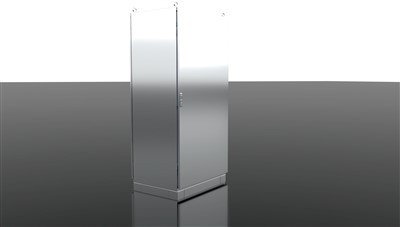
The electrical metal shell is not only a "protective shell" for the equipment, but also a comprehensive carrier for functional integration, user experience and engineering manufacturing. Its design must achieve a balance in terms of structure, function and ergonomics.
1. Structural strength and stress distribution
In order to ensure that the shell does not deform or crack under long-term use or extreme conditions, it is necessary to use finite element analysis (FEA) to optimize the design of wall thickness, reinforcement ribs and other structures. At the same time, it is also necessary to reasonably set the assembly tolerance and select a suitable connection method to ensure that the overall structure is stable and reliable for easy production and assembly.
2. Functional integration
Modern electrical equipment has higher functional integration requirements for the shell. For example, in terms of heat dissipation, it is necessary to reasonably arrange heat sinks, embed heat pipes and other heat-conducting components; in terms of electromagnetic compatibility (EMC), electromagnetic interference can be reduced through shielding layer design and effective grounding treatment. At the same time, the shell must also reserve a reasonable opening position to avoid accidental touch or misoperation, and improve user safety and ease of operation.


3. Ergonomic design
Excellent shell design should take into account the actual experience of users. The edge chamfering and grip curve optimization improve the hand feel and comfort of use; at the same time, the standardized interface design and modular expansion slots facilitate later maintenance and function upgrades, and improve the scalability and adaptability of the device.
4. Case analysis and trend outlook
In the field of consumer electronics, the development of metal casing manufacturing technology reflects the trade-off between technology and cost. For example, LeTV Le MAX uses a full CNC integrated molding process, which has extremely high precision and texture, but the manufacturing cost and processing cycle are high; in contrast, OPPO R7 uses forging + post-processing technology, which strikes a balance between cost control and production efficiency and is suitable for large-scale mass production. Another typical case is the iPhone's bimetallic structure design, which combines aluminum alloy with a stainless steel middle frame to achieve the dual goals of strength and lightness, while also taking into account the multiple needs of signal conduction, electromagnetic shielding and appearance design.


With the development of science and technology and environmental protection concepts, electrical metal casings are evolving in a smarter and greener direction. The application of smart materials has become a new trend, such as coating materials with self-healing functions and metal alloys with shape memory properties, which can restore their appearance after damage and extend the service life of the product. At the same time, the concept of sustainable design has gradually penetrated, and the use of modular detachable structures and bio-based alloy materials is not only convenient for later maintenance and upgrading, but also more in line with the requirements of green manufacturing and circular economy. In the future, the design of electrical enclosures will no longer be limited to the role of a "protective shell", but will be deeply integrated with multiple functions such as intelligent perception, environmental response, and eco-friendliness.
The selection and design of electrical metal enclosures is a systematic project, involving multiple dimensions such as material properties, processing technology, structural design, functional integration and environmental compliance. Only on the basis of fully understanding the mutual constraints and synergies of various factors can the optimal balance between performance and cost, practicality and aesthetics be achieved. Especially in the context of increasingly complex technology and diversified market demands, interdisciplinary collaboration is particularly important - the collaborative participation of material engineers, structural designers, industrial designers and even regulatory compliance experts will become the key to promoting the implementation of high-quality metal enclosure solutions. In the future, with the continuous development of smart materials and sustainable concepts, electrical metal enclosures will continue to evolve towards higher performance, stronger adaptability and higher environmental value.
Send Inquiry