

Can Metal Enclosures be customized according to our design drawings and specific requirements?
Feb 26, 2025
Leave a message
Introduction
Custom metal enclosures have become critical components in industries ranging from electronics to medical devices, driven by the need for precision and functional adaptability. According to market research, the global custom sheet metal fabrication market is expected to reach $13.7 billion in 2024, with more than 60% of demand coming from industries such as industrial automation and renewable energy.
Table of Contents
- Design Compatibility & Customization Capabilities
- Metal Enclosures: Material Selection & Manufacturing Standards
- How does the thickness of the metal enclosure material affect its durability and protection?
1.Design Compatibility & Customization Capabilities
The compatibility of design files is essential for smooth cooperation between buyers and suppliers. We know this well and we accept a wide range of CAD formats, such as SolidWorks and AutoCAD. SolidWorks, which can accurately create complex metal housing designs, is widely used in aerospace, automotive manufacturing and other fields. AutoCAD, on the other hand, is known for its flexibility and wide user base, and can easily handle both 2D and 3D designs.
For key dimensions, these suppliers can ensure a tolerance of ±0.1mm, a high-precision requirement that is essential in many high-end applications. For example, in electronic device manufacturing, precise dimensional tolerances ensure the perfect installation of internal components and avoid electrical connection problems or mechanical interference caused by dimensional deviations.
In terms of functional additions, suppliers provide a wealth of customization options. The customization of Internet of Things (IoT) sensor ports can meet the needs of modern devices for data collection and transmission. With the rapid development of IoT technology, more and more devices need to integrate various sensors, such as temperature sensors, humidity sensors, etc. The precise design and installation of these sensor ports can ensure the normal operation of the sensors. The addition of an electromagnetic interference (EMI) shielding layer can effectively protect the electronic components inside the device from external electromagnetic interference and improve the stability and reliability of the device. In some occasions with demanding electromagnetic environments, such as medical equipment and communication equipment, the role of the EMI shielding layer is particularly important. The integration of a cooling module is also an important customization option, especially for equipment that needs to operate in a high-temperature environment, such as high-voltage test equipment. By rationally designing the cooling module, the temperature of the equipment can be effectively reduced and the service life of the equipment can be extended.
1.2 Industry-Specific Solutions
In the field of medical equipment, there are strict requirements for the design and manufacture of metal casings. In order to meet the disinfection requirements of medical equipment, suppliers use 304 stainless steel as the main material and perform electrophoretic coating. 304 stainless steel has good corrosion resistance and biocompatibility, and can maintain stable performance in various disinfection environments. Electrophoretic coating can form a uniform and dense protective film on the surface of stainless steel, effectively preventing the occurrence of biological contamination. In some medical equipment, such as surgical instruments, medical imaging equipment, etc., the control requirements for biological contamination are extremely high. This design can ensure the safety and reliability of the equipment.
For the field of Industrial Internet of Things (IIoT), devices often need to operate in harsh outdoor environments. Therefore, IP54-level protection is essential. The IP54 rating indicates that the device is protected from dust ingress and can withstand water splashes from all directions. In addition, the use of tamper-proof fasteners can increase the security of the device and prevent unauthorized personnel from operating or damaging the device. In some applications such as industrial monitoring equipment and smart grid equipment, these protective measures can ensure that the equipment can operate stably for a long time in outdoor environments.
2.Metal Enclosures: Material Selection & Manufacturing Standards
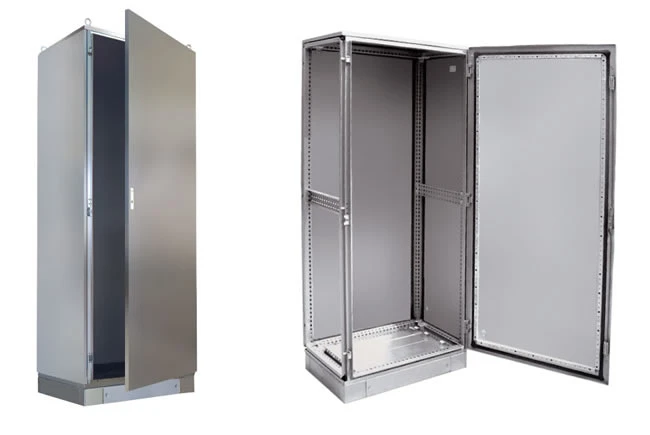
Stainless Steel
Stainless steel, particularly grades such as 304 and 316, are widely used for metal housings, especially in industries that require high levels of corrosion resistance and hygiene. In the food and beverage industry, stainless steel housings are preferred because they are easy to clean and sterilize, preventing the growth of bacteria and other contaminants.In the medical field, stainless steel housings for medical devices are biocompatible, meaning they do not react negatively with biological tissue. This is critical for devices that come into contact with the human body, such as surgical instruments and implantable device housings.
Manufacturing Standards
Precision Machining
Precision machining is essential to ensure the proper fit and function of components within metal housings. Tight tolerances can be achieved using advanced machining techniques such as computer numerical control (CNC) milling and turning. For example, when producing housings for high-precision optical devices, tolerances of less than 0.05 mm may be required to ensure that the optical components are properly aligned.
CNC machines can accurately cut, drill, and shape metal materials according to design specifications, producing consistent and high-quality parts. This level of precision also allows for the creation of complex geometries, such as internal cavities and intricate mounting features, which are often required in modern electronic and mechanical devices.
Welding Standards
Welding is a common method when multiple metal parts are joined together to form an enclosure. Different welding techniques are used, such as tungsten inert gas (TIG) welding, metal inert gas (MIG) welding, and spot welding, depending on the material and application requirements.
For stainless steel enclosures, TIG welding is often the first choice because it produces clean, precise welds with minimal distortion and high surface quality. For aluminum enclosures, MIG welding is more effective for larger joints. Welding standards also require strict quality control to ensure that the weld is free of defects such as cracks, porosity, and lack of fusion. Nondestructive testing methods such as X-ray inspection and ultrasonic testing are often used to verify the integrity of the weld.
Surface Finish Standards
As mentioned earlier, surface finish plays a vital role in enhancing the performance and appearance of metal enclosures. Anodized aluminum enclosures must meet specific standards regarding the thickness and uniformity of the oxide layer. For example, in architectural applications, anodized aluminum enclosures may require a minimum oxide layer thickness of 25 microns to ensure long-term durability and weather resistance.
3.How does the thickness of the metal enclosure material affect its durability and protection?
The thickness of the metal enclosure material has a significant impact on its durability and protection capabilities. Here's a detailed look at how different aspects are influenced:
1. Mechanical Strength and Impact Resistance
Higher Thickness, Greater Resistance: A thicker metal enclosure generally offers enhanced mechanical strength. When subjected to external forces such as impacts, collisions, or pressure, a thicker material can better withstand deformation and damage. For example, in industrial settings where equipment enclosures might be accidentally bumped by machinery or dropped during handling, a thicker metal enclosure made of steel or aluminum is more likely to remain intact and continue protecting the internal components. In contrast, a thin-walled enclosure may dent, crack, or even break under similar impacts, leaving the contents vulnerable.
Protection Against Vibration: Thicker metal also helps in reducing the effects of vibrations. In applications like engines or heavy machinery, where vibrations are common, a thicker enclosure can dampen these vibrations more effectively. This is crucial because excessive vibrations can cause internal components to loosen, malfunction, or fail over time. A thicker metal acts as a better barrier, isolating the internal parts from the harmful effects of external vibrations and thus increasing the overall durability of the enclosure and its contents.
2. Corrosion Resistance
Increased Lifespan: While the type of metal and its surface treatment are major factors in corrosion resistance, thickness also plays a role. A thicker metal enclosure has more material available to withstand the gradual loss of metal due to corrosion. For instance, in outdoor applications where the enclosure is exposed to moisture, salt, and other corrosive elements, a thicker metal can last longer before the corrosion reaches a critical level that affects its structural integrity. Even if the surface of the metal starts to corrode, a thicker piece will take more time to penetrate through the entire material compared to a thinner one.
Better Protection for Internal Components: As corrosion progresses, it can compromise the enclosure's ability to protect the internal components. A thicker metal provides an extra layer of defense, ensuring that the corrosive process takes longer to reach and damage the sensitive parts inside. This is especially important in environments where the presence of corrosive substances is inevitable, such as in chemical plants or coastal areas.
3. Thermal Performance
Heat Dissipation and Retention: The thickness of the metal can influence how well the enclosure manages heat. In some cases, a thicker metal can act as a better heat sink, absorbing and dissipating heat more effectively. For example, in high-power electronic devices like servers or power supplies, a thicker metal enclosure can help spread the heat generated by the internal components over a larger surface area, reducing the risk of overheating. On the other hand, in applications where heat retention is desired, such as in some types of industrial ovens or heaters, a thicker metal can help maintain the internal temperature by reducing heat loss to the surroundings.
Thermal Expansion and Contraction: Thicker metals may also experience less significant thermal expansion and contraction compared to thinner ones. This is important because excessive expansion and contraction can cause stress on the enclosure and its internal components, potentially leading to damage over time. A thicker metal enclosure can better accommodate these thermal changes without developing cracks or other forms of damage.
4. Electrical and Electromagnetic Properties
Electromagnetic Shielding: In applications where electromagnetic interference (EMI) or radio frequency interference (RFI) protection is required, a thicker metal enclosure can provide better shielding. The additional thickness of the metal helps block or absorb electromagnetic waves, preventing them from interfering with the operation of internal electronic components. For example, in telecommunications equipment or sensitive medical devices, a thicker metal enclosure can enhance the protection against external electromagnetic signals, ensuring the reliable operation of the equipment.
Electrical Conductivity: While the electrical conductivity of the metal itself is a fundamental property, the thickness can affect how effectively the enclosure can conduct electricity in certain situations. For example, in grounding applications, a thicker metal can provide a more robust path for electrical current to flow to the ground, reducing the risk of electrical shocks or damage to the equipment due to electrical surges.
Send Inquiry