


Polyester Electrical Enclosures
- Lightweight Construction
Fiberglass-reinforced polyester enclosures weigh less than comparable metal enclosures, simplifying handling, transportation, and installation.
- Corrosion and Weather Resistance
The polyester composite material resists corrosion in suitable chemical and outdoor environments, helping protect electrical components under demanding operating conditions.
- Electrical Insulation
Fiberglass-reinforced polyester provides electrical insulation, making the enclosure suitable for housing electrical components and control equipment.
- Mechanical Strength and UV Resistance
The reinforced composite structure offers mechanical strength and impact resistance, while UV-resistant formulations help reduce material degradation during outdoor use.

Technical Specifications
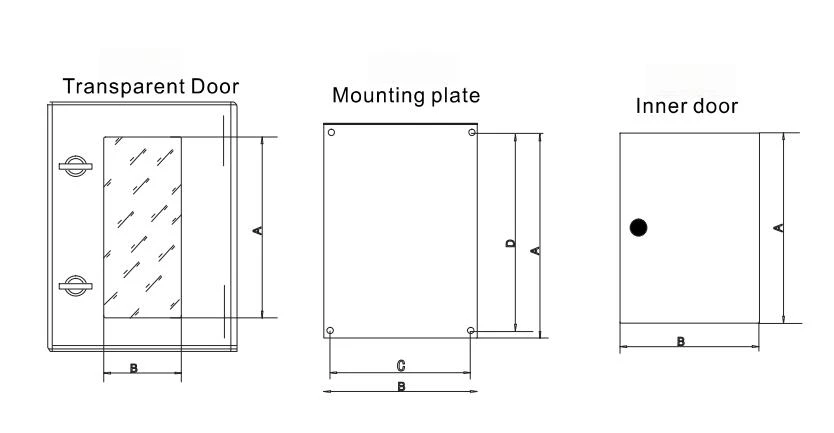
|
Item |
Specification |
|---|---|
|
Enclosure Material |
Fiberglass Reinforced Polyester (GRP) |
|
Construction |
Molded Body and Door |
|
Dimensions |
Available in Multiple Sizes |
|
Mounting Type |
Wall-Mounted / Other Available Options |
|
Door Configuration |
Single Door / Double Door |
|
Protection Rating |
Model-Specific IP Rating |
|
Electrical Insulation |
Insulating Composite Material |
|
Color |
Standard / Optional Colors |
|
Mounting Plate |
Available Depending on Configuration |
|
Cable Entry |
According to Product Design |
|
Applications |
Electrical Distribution, Industrial Control, Outdoor Electrical Systems |
Polyester Electrical Enclosure Manufacturing Process
Raw Material Preparation
Select fiberglass and resin according to the enclosure's material and performance requirements. Prepare the fiberglass cloth or mat and resin for the molding process.
Mold Preparation
Clean the mold surface and apply a release agent to facilitate demolding and help maintain the enclosure's surface finish.
Fiberglass Layering and Resin Application
Place fiberglass cloth or mat into the mold according to the product design. Apply resin evenly between layers to achieve the specified wall thickness and structural strength.
Curing and Demolding
Allow the fiberglass and resin to cure under controlled conditions. Once curing is complete, remove the molded enclosure carefully to prevent surface damage or deformation.
Trimming and Machining
Trim excess material, smooth the edges, and perform the required drilling or machining according to the product drawings and specifications.
Surface Finishing and Packaging
Complete any required surface finishing, inspect the enclosure for dimensional accuracy and visible defects, and package qualified products for shipment.

Polyester Electrical Enclosure Manufacturer
Prota offers polyester electrical enclosures made from fiberglass-reinforced polyester (GRP) for electrical distribution, industrial control, and outdoor installations. These enclosures feature electrical insulation, corrosion resistance, and mechanical strength to protect electrical components in demanding environments.
Available options include different enclosure dimensions, door configurations, mounting arrangements, and IP protection ratings to meet varying installation requirements. Contact Prota for product specifications, available configurations, and quotation support.
FAQ
What Is the Difference Between Polyester and Metal Electrical Enclosures?
Polyester enclosures are made from non-metallic composite materials, while metal enclosures are typically manufactured from steel or stainless steel. Polyester is electrically insulating and does not rust, whereas metal enclosures may be preferred for applications requiring specific structural or mechanical properties.
Can Polyester Electrical Enclosures Be Machined?
Yes, polyester enclosures can generally be drilled, cut, or machined to accommodate cable entries, switches, and other components, provided the enclosure design allows it. Any modifications should maintain the required protection level and structural integrity.
Can Polyester Enclosures Be Used in Chemical Processing Facilities?
Polyester enclosures may be suitable for chemical processing environments, depending on the resin formulation, chemical concentration, exposure duration, and operating temperature. Confirm material compatibility before selecting an enclosure for chemical exposure.
Are Polyester Electrical Enclosures Suitable for Railway and Marine Applications?
They may be used in railway equipment, marine electrical systems, and related infrastructure when their mechanical performance, environmental resistance, and protection ratings meet the application requirements. Salt exposure, vibration, and impact requirements should be evaluated for each installatio
Hot Tags: polyester electrical enclosures, China, manufacturers, suppliers, factory, customized, wholesale
You Might Also Like


Send Inquiry